What Forward Deployed Engineers Learn About AI Adoption Fast
What a forward deployed engineer learns fast about AI adoption, from trust gaps and workflow breaks to product fixes that survive handoff.
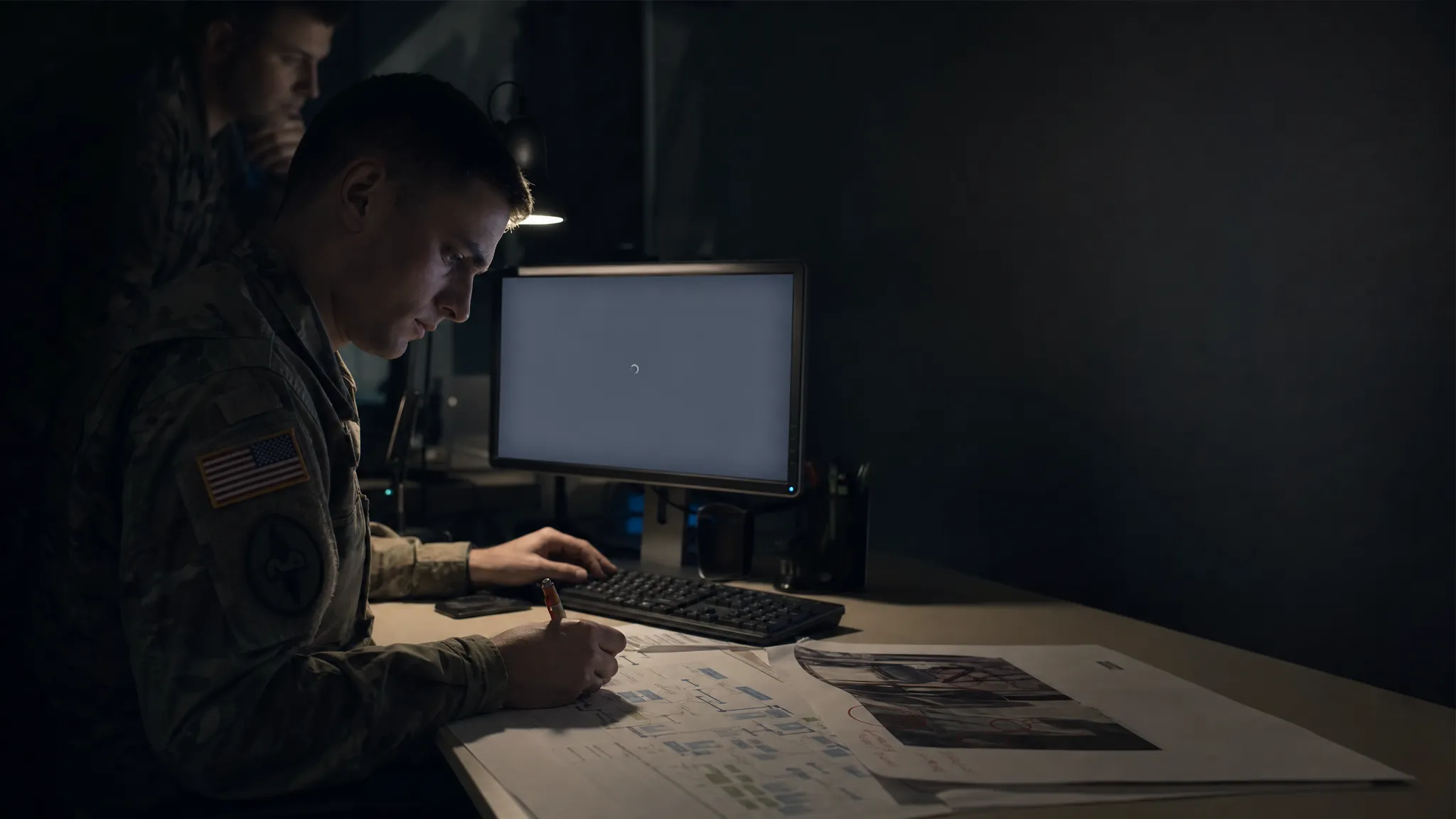
Your AI feature works when someone from your team is in the room.
The customer nods during the demo. The pilot looks alive. A few power users get value. Then the forward deployed engineer leaves, and usage thins out. Prompts get shorter. Outputs sit unused. The champion asks for another “enablement session.”
That is not just an implementation problem. It is adoption data.
A forward deployed engineer sees the part of AI adoption that dashboards usually flatten. They sit close to the customer’s real workflow, real data, real politics, and real risk. They watch users move from “this is impressive” to “can I trust this enough to use it on Tuesday?”
That distance is where AI products usually break.
Why forward deployed engineers see adoption breaks first
Most product teams see aggregated events. Generations. Clicks. Activations. Exports. Maybe a retention curve.
A forward deployed engineer sees the hesitation between those events.
They hear the question before the drop-off: “What should I type here?” They see the user copy the answer into a doc, rewrite half of it, then never come back. They notice that the output is technically good, but lands in the wrong format, at the wrong time, for the wrong person.
This matters because AI adoption is rarely killed by one obvious failure. It is usually killed by small frictions that compound:
- The user does not know how to ask.
- The output looks plausible but unverified.
- The answer does not map to the next step in the workflow.
- The team cannot govern use across accounts, teams, or models.
- The customer needs the engineer to translate the product into their operating reality.
That last point is the warning sign. If adoption depends on the forward deployed engineer staying involved, the product has not learned enough from the deployment yet.
The model can be right and still not adopted
This is the first thing field teams learn.
A product team may look at quality and think the problem is solved. The model summarizes the call correctly. It drafts the email well enough. It finds the relevant policy. It writes code that compiles.
Then the user ignores it.
Why? Because “correct” is not the same as “usable.”
A sales manager does not need a beautiful account summary. They need the three risk points that change the forecast, in the CRM field they already review on Friday. A designer does not need ten generic concept directions. They need three options that fit the brand system, the campaign constraint, and the review format. A developer using something like GitHub Copilot or Cursor does not only need code. They need code they can inspect, modify, and ship without losing confidence in the surrounding system.
Forward deployed engineers learn this fast because customers make the gap visible. They say things like “this is good, but I still have to do the work.”
That sentence is the product diagnosis.
The output created value, but it did not remove enough work. Or it created new work in verification, formatting, cleanup, or coordination.
Prompting is often a product design failure
Many teams treat prompting as a user skill problem. Field teams usually learn the opposite.
If users keep asking, “what should I put in the box?”, the product is under-designed. A blank prompt field is not flexibility when the user is under time pressure. It is cognitive load.
Forward deployed engineers often become human prompt templates. They show customers which inputs matter, which words get better results, which files to include, and which requests are too broad. That help is useful during discovery. It is dangerous if it becomes the product.
The product response is not always “add better prompt examples.” Sometimes it is:
- Turn an open prompt into a task-specific flow.
- Pre-fill context from the user’s workflow.
- Offer structured choices instead of asking for a perfect instruction.
- Show examples based on the user’s role, not generic use cases.
- Save successful patterns as reusable actions.
Prompt paralysis is not a training issue if it happens repeatedly in the same step. It is a design issue.
Trust breaks show up as requests for human backup
The most important field signal is not “the AI was wrong.” It is “can you check this?”
Users may like the output and still refuse to use it. They need a way to verify what happened. They need to know what source was used, what changed, what confidence is reasonable, and what risk they are taking by moving forward.
This is where many AI products underinvest. They optimize generation speed, then leave verification to the user.
A forward deployed engineer sees the hidden verification tax. They watch users open five tabs, compare against source material, ask the engineer to confirm, or route the answer through a senior teammate. The product event may still show “accepted.” The real behavior says “not trusted.”
For PMs, the fix is not a vague trust badge. It is a clearer inspection path. Show the evidence. Make uncertainty visible. Give users an edit surface. Let them compare before and after. Design the handoff so the user knows what they are approving.
In AI products, trust is not a feeling you add later. It is part of the workflow.
Governance is part of adoption, not just procurement
Field teams also learn that production adoption depends on control.
A small team may try an AI feature informally. A department may even get value from it. But broader adoption often stalls when leaders ask practical questions: Who can use which model? What data is allowed? How do we control spend? What happens when teams use different tools for the same workflow?
Those are not only IT concerns. They shape whether users can bring AI into real work.
This is especially visible in creative and operational teams where AI touches assets, approvals, vendors, and budgets. The adoption problem is not just output quality. It is whether teams can run AI inside a governed production system. That is the kind of problem operating-layer products like Virtuall for creative AI production are built around: teams need control across workflows, models, and spend before usage can scale safely.
The lesson is simple. If governance is unresolved, users may keep AI in side projects. They will not make it the default path for important work.
The field pattern table
Forward deployed engineers hear different symptoms than product dashboards show. Translate those symptoms into adoption breaks.
| Field symptom | Likely adoption break | What it means | Product response |
|---|---|---|---|
| “Can you run it for me?” | Self-serve failure | The user cannot operate the feature without expert translation | Simplify the entry path, pre-fill context, or constrain the task |
| “What should I ask it?” | Prompt paralysis | The user understands the goal but not the interaction model | Replace blank prompts with task frames and examples |
| “Is this safe to send?” | Trust gap | The user lacks verification, provenance, or approval confidence | Add source views, diffs, confidence cues, and review states |
| “This is good, but I still need to move it over there.” | Workflow handoff failure | The output is not landing where work continues | Integrate with the next system or format for the next action |
| “Our team does it differently.” | Context mismatch | The model or UX ignores local process, language, or constraints | Capture account-specific patterns without making every deployment custom |
| “Who is allowed to use this?” | Governance blocker | Production use creates risk the product does not address | Add controls, permissions, auditability, or admin workflows |
| “The champion uses it, but nobody else does.” | Role mismatch | Value depends on one motivated user, not the team’s routine | Design onboarding and triggers for each role in the workflow |
This table is not a replacement for instrumentation. It is a way to keep qualitative evidence from getting dismissed as “anecdotal.” If the same phrase shows up across accounts, it is product signal.
The danger: FDEs can hide weak product adoption
A strong forward deployed engineer can make a weak product look adopted.
They can write the prompt. Clean the data. Explain the workflow. Calm down the buyer. Patch the integration. Translate vague user feedback into something the system can handle.
That work may be necessary early. It is also a liability if the company confuses assisted value with product value.
The question is not “did the customer get value while we were there?” The question is “what value remains when we leave?”
If the answer is unclear, separate deployment work from product adoption work. Deployment gets the feature into the customer environment. Adoption makes the feature repeatable without heroic support.
A useful field review asks one blunt question: if the forward deployed engineer disappeared tomorrow, which step would fail first?
The answer tells you what to build next.
How PMs should use FDE evidence
Do not ask field teams only for feature requests. Ask them for failure moments.
A feature request often describes the customer’s preferred fix. A failure moment describes the adoption break. The second one is more useful.
For each deployment, capture six things:
- The trigger that made the user reach for the AI feature.
- The input the user struggled to provide.
- The output they accepted, edited, ignored, or rejected.
- The verification behavior they used before trusting it.
- The handoff into the next workflow.
- The repeat trigger that would bring them back next week.
This gives product teams a cleaner map than “customer wants more customization.” Maybe the real issue is weak defaults. Maybe the workflow needs a review state. Maybe the product is serving the buyer’s use case but not the daily user’s job.
If you want to go deeper, this is the kind of symptom-to-response work the AI Product Adoption Deck is built for. It includes diagnostics, action cards, and workshops for turning adoption symptoms into product decisions rather than vague roadmap debates.
A simple next step for your next deployment review
Pull the last three customer calls where a forward deployed engineer had to intervene. Do not review them for bugs first. Review them for dependency.
Mark every moment where the engineer had to explain, translate, reassure, reformat, verify, or manually connect systems. Then ask which of those moments should become product behavior.
Some should stay human. Enterprise deployments will always need judgment, context, and relationship work. But repeated intervention is not white-glove service. It is an unbuilt product surface.
If your AI feature is getting used only when experts are nearby, you do not have an adoption mystery. You have a handoff problem.
Frequently Asked Questions
What does a forward deployed engineer do in AI products? A forward deployed engineer works close to customers to help deploy, adapt, and operationalize the product in real workflows. In AI products, they often uncover where users struggle with inputs, trust, verification, workflow handoff, and governance.
How is a forward deployed engineer different from a solutions engineer? The roles can overlap, but a forward deployed engineer usually goes deeper into implementation and product feedback. They may write code, shape integrations, debug workflow issues, and bring field evidence back into the product roadmap.
Why are forward deployed engineers useful for AI adoption? AI adoption breaks are often behavioral, not purely technical. Forward deployed engineers see the moments users hesitate, abandon outputs, ask for confirmation, or fail to repeat the workflow after onboarding.
Can a forward deployed engineer create false adoption signals? Yes. If customers only succeed because the engineer is constantly helping, the product may be relying on human glue. PMs should track which parts of the workflow become self-serve and which still require field intervention.
When should a product team act on FDE feedback? Act when the same adoption break appears across accounts, roles, or workflows. One custom request may be noise. A repeated trust gap, prompt failure, or handoff problem is roadmap signal.
If you are not sure which adoption break you are seeing, run the symptom through the free AI adoption triage. It is a faster way to separate trust problems from workflow problems, prompt problems, and retention problems before you commit another sprint.